You seal the one gap you can see, and a week later there is a fresh dropping behind the stove. In NYC buildings, that usually means the way in is somewhere else.
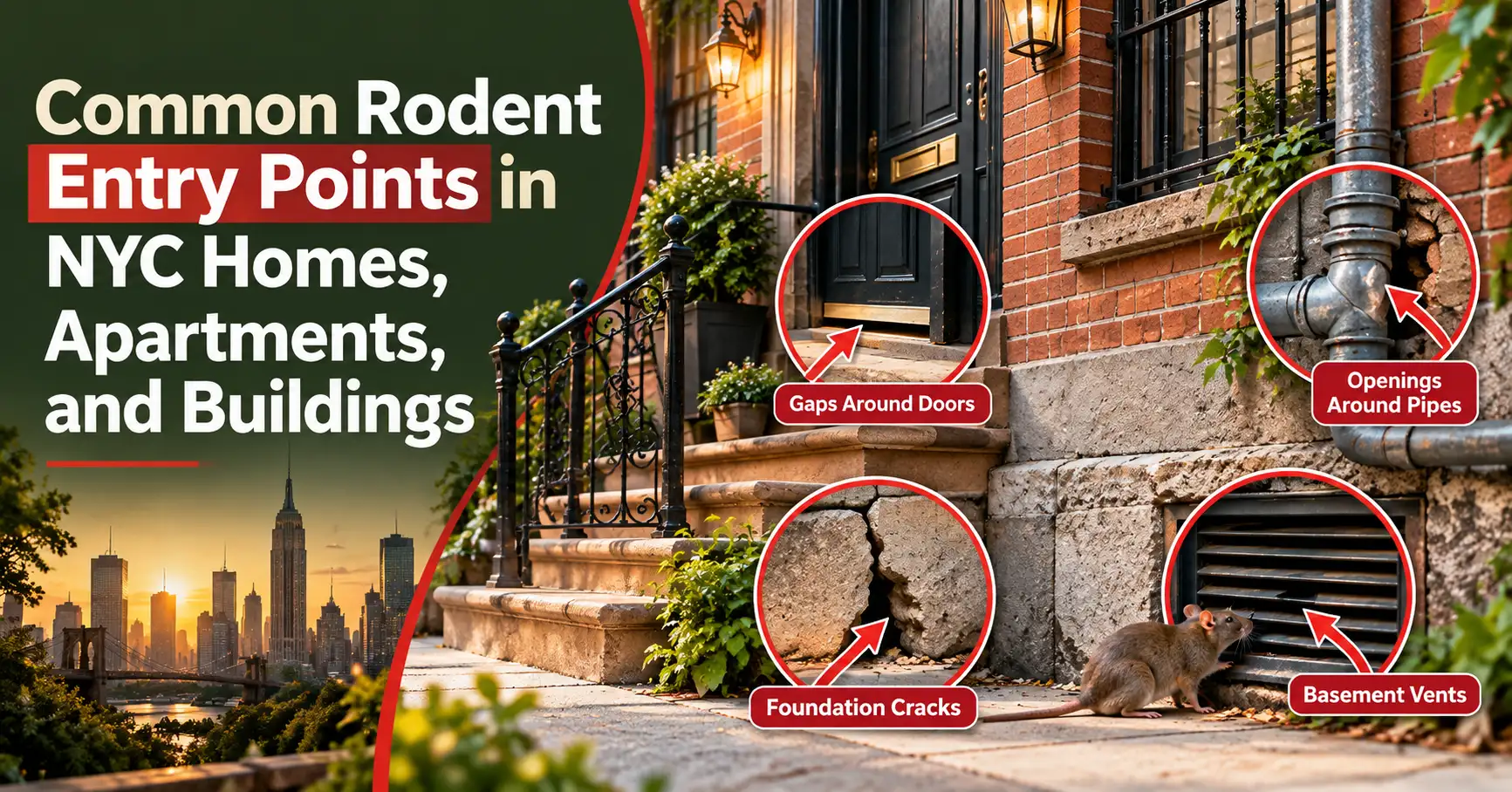
The most common rodent entry points in NYC are gaps around pipes and utility lines, spaces under and around doors, damaged vents and screens, cracks in walls and foundations, and shared basements or service areas. Mice can use very small openings, and rats can enlarge weak spots by gnawing, so a gap does not have to look big to matter.
This guide walks through the entry points to check in homes, apartments and commercial buildings, how big a gap rodents can use, how to find the routes in your own building, and how to seal them.
Key takeaways
- Check where systems meet the structure: pipes, vents, doors and utility lines are the usual routes.
- Small gaps count: mice can fit through very small openings, and rats can widen weak spots.
- The entry point is often not where you saw the rodent: in apartment buildings, the route may run through a shared wall, basement or utility area.
- Sealing works best with sanitation: closing gaps and removing food, water and clutter go together.
- One sealed gap is not a fix: check the whole building, including shared and exterior areas.
What are the most common rodent entry points in NYC buildings?
Use this as a quick checklist before reading the details below:
- Gaps around pipes, cables and conduits
- Spaces under and around doors, including worn door sweeps
- Damaged or unscreened vents and torn window screens
- Cracks and holes in walls, foundations and rooflines
- Gaps along baseboards, behind appliances and under sinks
- Shared basements, boiler rooms, utility chases and trash areas
- Loading doors, delivery doors and exterior trash areas in commercial buildings
Why do NYC buildings give rodents so many routes?
Apartments, older buildings, basements, restaurants and shared utility spaces give rodents food, shelter and routes between units. Pipes, wiring and ductwork often run through several apartments, so an opening in one place can connect to many others.
Common rodent entry points in NYC homes
Pipes and utility lines under sinks
The holes cut for plumbing under kitchen and bathroom sinks are often larger than the pipes. Check around water, gas and drain lines, and behind washing machines and dishwashers.
Doors and thresholds
Gaps under exterior doors and worn or missing door sweeps give rodents a direct route in, particularly on ground-floor and basement doors.
Windows, vents and screens
Torn window screens and damaged or unscreened vents are easy to overlook, especially near the ground, near basements and around dryer or exhaust vents.
Walls, baseboards and foundations
Cracks in walls and foundations, gaps along baseboards and openings where different building materials meet can open up over time. Mice in particular can use very small gaps.
Attics, roof lines and chimneys
In houses and low-rise buildings, openings near roof lines, eaves and chimneys can give climbing rodents a route in. Check for gaps, damaged materials and missing covers.
Common rodent entry points in NYC apartments and multi-unit buildings
In an apartment building, the rodent you see may be using an opening several units away. A tenant may see mice in the kitchen while the route is near a shared utility area.
Shared walls and utility chases
Pipes, wiring and ductwork often pass through several apartments. Gaps around those penetrations can let rodents travel between units without ever crossing an open room.
Basements, boiler rooms and service areas
Shared basements, boiler rooms and storage areas often combine hidden spaces, utility openings and trash or stored materials, which makes them a common starting point.
Trash and waste areas
Uncovered or overfilled trash gives rodents food and shelter close to the building. Gaps between trash areas and the structure can then give them a route in.
Who is responsible for fixing entry points?
The NYC Health Department says tenants should report rats promptly to the property owner, building manager or co-op association, and that tenants can file a complaint online or call 311 if the owner does not meet their legal obligations. Owners are responsible for keeping properties rat-free and fixing conditions that attract rats, while tenants can help by securing garbage, removing clutter and reporting sightings. In practice, the tenant, property manager and maintenance team often need to coordinate so that the whole route is closed, not just one visible gap.
Common rodent entry points in commercial buildings and restaurants
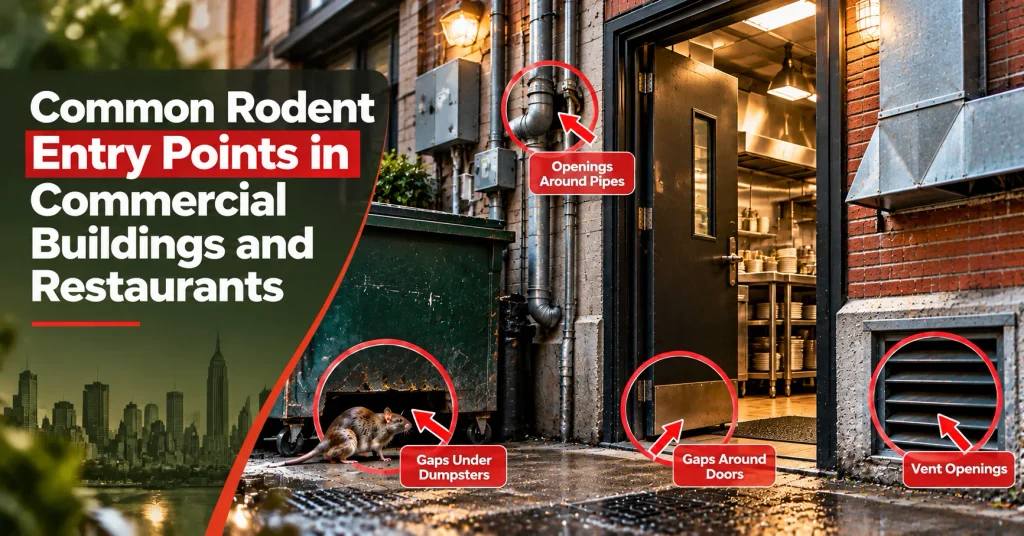
Businesses add routes that homes do not have, and they also offer more to attract rodents, such as food storage and regular deliveries.
- Loading doors and delivery doors that stay open or do not seal at the bottom
- Gaps around exterior utility lines and rooftop equipment
- Exterior trash and dumpster areas close to doors
- Storage rooms with stacked inventory against walls
- Kitchen and prep areas with gaps around pipes and equipment
Effective management may need coordination between the owner, building management, maintenance staff and the pest management provider.
How big a gap can rodents get through?
A commonly cited rule of thumb is that mice can squeeze through gaps of about a quarter of an inch, while rats need gaps of about half an inch, although rats can gnaw to enlarge a weak spot. Treat any gap you can fit a finger or pencil into as worth sealing, and pay extra attention to places where pipes enter walls.
How do you find rodent entry points?
What should you check inside?
- Under sinks and behind appliances
- Around pipes, vents and utility openings
- Along baseboards and wall edges
- In basements, storage rooms and utility areas
- Along walls where droppings or gnaw marks collect
What should you check outside?
- Around the foundation and the base of walls
- Door sweeps, door frames and loading doors
- Vent covers, window screens and exhaust openings
- Roof lines, eaves and chimneys
- Trash storage areas close to the building
Which clues point to a route?
- Droppings concentrated along one wall or near a particular gap
- Gnaw marks around the edges of an opening
- Sounds that seem to come from one section of a wall or ceiling
- Fresh signs that return after you remove the visible evidence
Early signs of rodent activity are covered in our complete guide to rats and mice in Queens. Hidden spaces are hard to judge alone, so a professional inspection can check areas that are difficult to reach.
How do you seal rodent entry points?
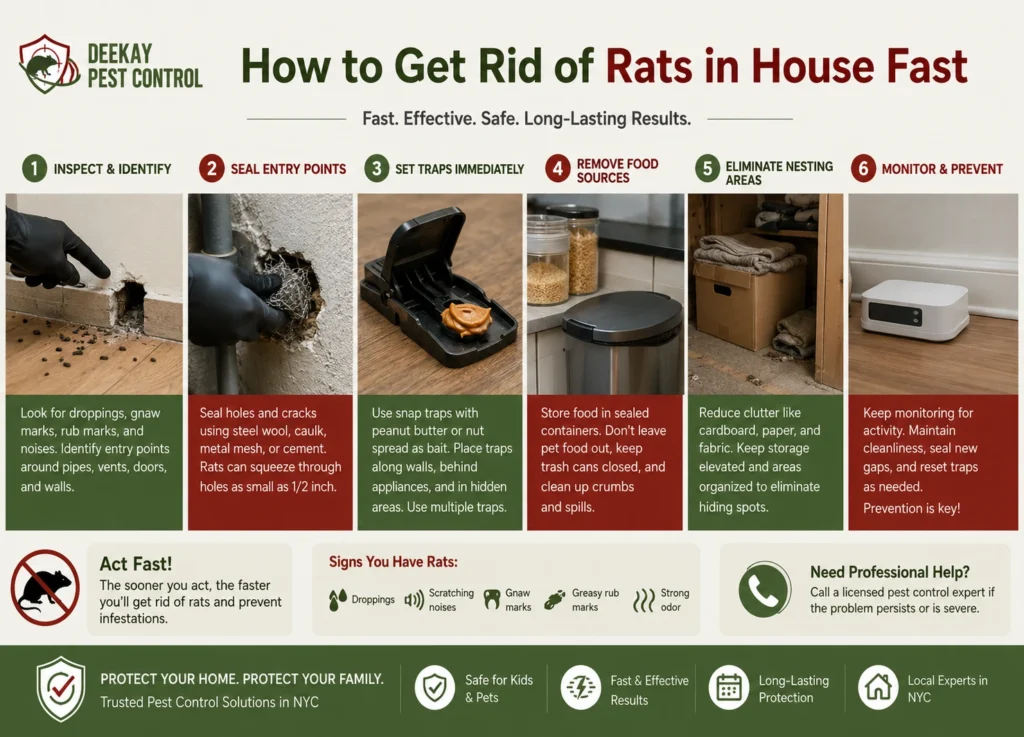
- Close gaps around pipes and utility lines with durable materials rather than soft ones rodents can chew through
- Repair damaged door sweeps and door frames
- Replace torn screens and cover or close suitable openings at vents
- Repair cracks and holes in walls, foundations and other materials
- Fix the entry point before or alongside any removal work, not afterwards
This is called rodent-proofing, or exclusion. The Health Department advises sealing cracks and holes in foundations, walls, floors, underneath doors and around windows, and its Preventing Rats on Your Property guide has step-by-step detail. The CDC also advises that wild rodents near people be controlled and excluded from homes. Sealing one visible gap may not help if other routes stay open, so check the whole building, including shared areas.
What keeps rodents around once they are in?
Access gets rodents in, and easy resources keep them there. Pair sealing with these steps:
- Store food and pet food in secure containers
- Improve trash storage and waste management
- Fix leaks and standing water
- Reduce clutter where rodents can hide
Why do rodents keep coming back after sealing?
Catching a rodent and then seeing fresh signs later is a common frustration, explored in why rats keep coming back. It does not automatically mean the first effort failed. Common reasons include:
- Unsealed gaps and openings elsewhere in the building
- Food or trash they can reach
- Activity in areas that were hard to inspect
- Shared building spaces that stay accessible
- Too little monitoring after the first effort
When should you get professional help finding entry points?
For limited activity, secure food storage, better waste management, repairs and carefully used traps may be enough. Repeated sightings, suspected activity in hidden spaces or signs of a wider problem may justify a professional assessment, such as a rodent inspection.
What does a rodent inspection cover?
- Droppings and gnaw marks
- Gaps around pipes, doors, vents and other openings
- Basements, storage rooms and utility areas
- Possible nesting areas and accessible food
No method can guarantee rodents will never return. Results depend on the infestation, the building, the treatment and whether contributing factors are fixed.
Not sure where rodents are getting in? Tell us what you have seen, and we will explain the likely entry points and the right next step for your home, apartment or building. Request a rodent inspection or call (347) 383-5071.
Is it safe to clean up where rodents have been?
Handle droppings and contaminated materials with care. Don’t sweep or vacuum dry droppings or nesting material, because the CDC’s cleanup guidance warns that doing so can cause tiny droplets containing viruses to get into the air. Follow public health guidance or ask a professional when contamination is heavy. Food that has been exposed to rodent activity may be contaminated, so consider discarding it. Signs of chewing near wiring should be assessed by a qualified electrician. Avoid handling rodents directly, and keep control products where children and pets cannot reach them.
Frequently asked questions
What are the most common rodent entry points in NYC?
Gaps around pipes and utility lines, spaces under and around doors, damaged vents and screens, cracks in walls and foundations, and shared basements or service areas.
How small a hole can a mouse get through?
A commonly cited figure is about a quarter of an inch, which is why even minor gaps matter. Rats need larger openings but can gnaw to widen weak spots.
How do you find where mice are getting into an apartment?
Check under sinks, around pipes, behind appliances and along baseboards, and look for droppings concentrated along one wall, gnaw marks around openings and scratching sounds from one area. Shared utility areas and basements may also need checking.
Can rodents get into an apartment from another unit?
Yes. Pipes, wiring and ductwork often run through several apartments, so gaps around them can connect units. That is why repeat sightings should be reported to the property manager or landlord.
Will sealing entry points get rid of rodents already inside?
Not by itself. Sealing stops new rodents from entering, but animals already inside need to be dealt with, and sanitation and monitoring help confirm that activity is dropping.
What affects the cost of rodent control in NYC?
It depends on property size, extent of activity, access, treatment needs and whether follow-up or exclusion work is required. This breakdown of what affects rodent removal costs explains the factors in more detail.
Final thoughts on rodent entry points in NYC
Rodents need two things: a way in and a reason to stay. Finding and sealing the entry points addresses the first, and sanitation, storage and follow-up checks address the second.
- Check pipes, doors, vents, walls and shared areas, not just the spot where you saw the rodent.
- Seal with durable materials and check the whole building.
- If signs keep returning despite your efforts, a professional assessment can show what is being missed.
Dealing with an active rodent problem in Queens or elsewhere in NYC? Deekay Pest Control can inspect the property, look for entry points and explain the next steps. Learn about our rodent control service →, get in touch or call (347) 383-5071. We serve Queens, including Corona and Cambria Heights, and Brooklyn.
Sources
- NYC Health Department: Rats, Information for Tenants and Property Owners
- NYC Health Department: Preventing Rats on Your Property (PDF)
- CDC: How to Clean Up After Rodents
- CDC: Hantavirus Prevention
This article is general information only. For health concerns, electrical damage or heavy contamination, consult a qualified professional.