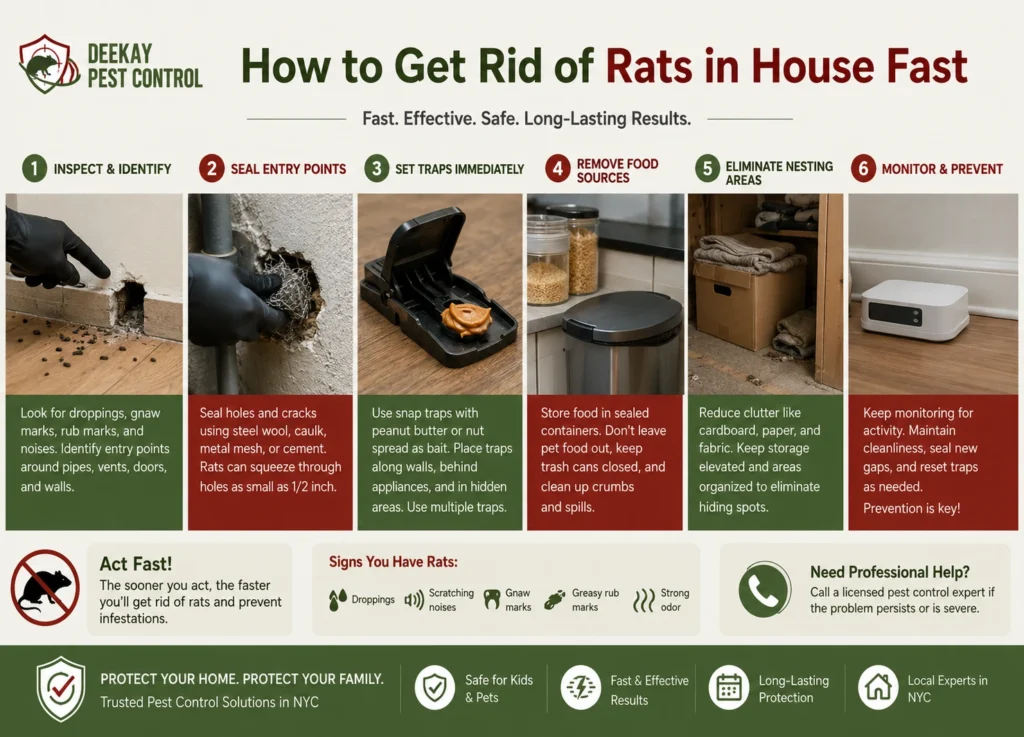
Winter in New York City is a relocation season — for rodents. As outdoor food disappears and temperatures fall, Norway rats abandon their yard burrows for basements and wall voids, and house mice slip into any heated structure they can reach. Done right, winter rodent control is what separates a quiet season from a full-blown infestation. The buildings that get through winter rodent-free are rarely the lucky ones — they are the ones whose owners closed the property up before the first cold spell.
This guide explains how to do exactly that — not just for the apartment inside, but for the whole property: foundation, roofline, yard, garage, and the trash system that feeds more rodent problems than everything else combined. It is written for Queens homeowners, brownstone and multi-family owners, and anyone responsible for a building in Jamaica and the surrounding neighborhoods.
Why Winter Puts Your Whole Property at Risk
Three things change in winter, and all three work in the rodents’ favor:
- Outdoor food collapses. Gardens die back, fallen fruit disappears, and the easy calories of summer vanish. What remains is concentrated around buildings: trash, pet food, birdseed, and grease.
- Warmth becomes a survival resource. A heated building leaks warmth through its foundation, pipes, and vents. Rodents follow those heat signatures. Norway rats that spent summer in yard burrows will happily move that burrow system against — or under — your foundation.
- Snow hides activity and reveals it. Snow cover hides droppings and runways from casual view, but it also betrays rodents: tracks and tail-drag marks in fresh snow show you exactly which paths they are using, if you look the morning after a snowfall.
Rodents do not hibernate. A rat colony active in your yard in October is looking for a warmer headquarters in November — and your property is the obvious candidate unless you make it a hard target.
Know Your Property Type — the Risks Differ
Detached and semi-detached houses (much of Jamaica, South Jamaica, Hollis, and St. Albans) face the full exterior list: foundation cracks, garage gaps, rooflines, yards with burrows, woodpiles, and sheds.
Brownstones and attached row houses share walls with neighbors. Your sealing matters, but so does the building on each side — rodents travel laterally through shared voids and along party walls. Coordinate with neighbors where you can.
Small multi-family buildings (2–9 units) add a management layer: trash systems, basement storage, and common areas decide whether the building feeds rodents all winter. One tenant’s overflowing bags can undo every other unit’s prevention.
Apartments inside large buildings are a different problem — interior sealing and landlord coordination. If that is your situation, our companion guide on winter rodent prevention in NYC apartments covers it step by step.
Winter Rodent Control: Start with the Exterior
The strongest winter strategy is to stop rodents at the building’s outer shell — the foundation, doors, and roofline — before they ever test the interior. Work in this order:
1. Foundation and ground level. Walk the entire perimeter slowly. Seal cracks in the foundation, gaps where utility lines enter, and holes around outdoor faucets. A mouse needs a gap of only about 6 millimeters — the diameter of a pencil. A rat needs about 12 millimeters. Fill small gaps with copper mesh or backer rod plus sealant; patch larger holes with mortar or metal flashing. Expanding foam alone is not a barrier — rodents chew through it in hours.
2. Doors and garages. Fit brush or rubber sweeps to every exterior door, including basement and garage doors. The bottom corner of a garage door is the single most common rat entry point on Queens houses — check that the seal meets the ground across the full width, with no daylight visible at the corners.
3. Roofline, vents, and chimneys. Mice climb well and rats climb adequately — ivy, trellises, and tree branches touching the building are ladders. Trim branches back from the roof, screen attic and soffit vents with metal mesh, cap unused chimneys, and check where the roof meets the wall for gaps. Squirrels get the blame for most attic noises, but mice use the same routes.
4. Drains and sewer connections. Rats live in the sewer system and enter buildings through broken drain lines and dry floor drains. Keep floor-drain traps filled with water (a little mineral oil slows evaporation), fit drain covers, and treat a rat sighting near a basement drain as a plumbing problem as much as a pest problem.
For the room-by-room interior version of this list, see our guide to common rodent entry points in NYC.
The Yard: Burrows, Woodpiles, and Birdseed
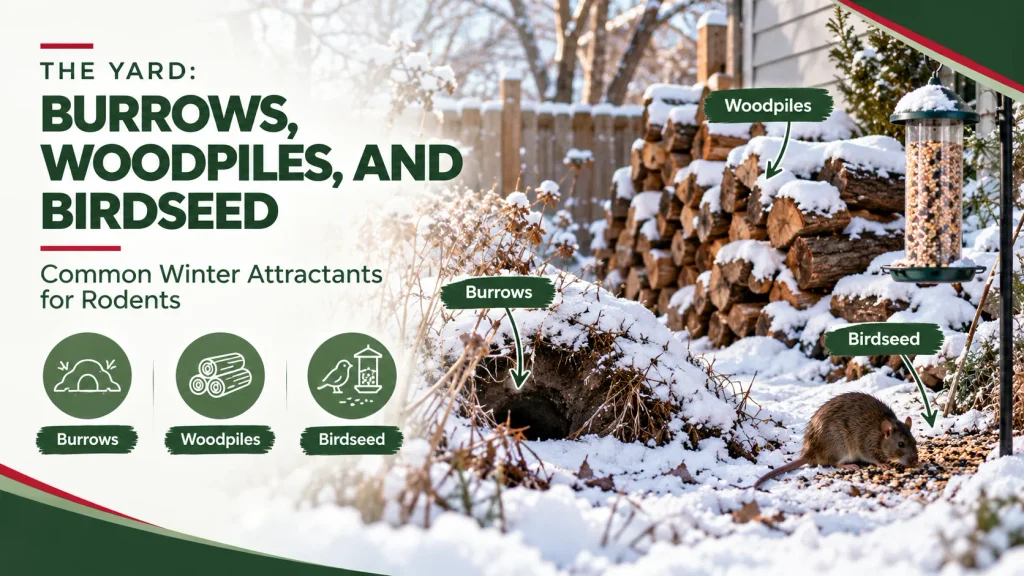
Most winter rodent control failures start outdoors in fall. Three yard habits decide whether rats settle on your property:
- Burrows. Norway rat burrows have smooth, round entrances about 2–4 inches wide, usually with a fan of loose soil, and systems run roughly 12–18 inches deep with a hidden escape hole. A rat only needs 6–8 inches of soil cover, and colonies stay within about 50–100 feet of food. Fresh burrows along the foundation, fence line, or under a deck in fall are a winter infestation being built — fill and monitor them, or have them treated before the colony moves indoors.
- Woodpiles and clutter. Firewood stacked against the house is a rodent apartment block with a heat source. Stack wood off the ground and away from the building. Clear stored junk, old appliances, and dense ground cover near the foundation.
- Bird feeders and pet food. A bird feeder is a rat feeder with better marketing. If rats are active on your block, pause feeding for the winter or switch to a feeder with a catch tray, and never leave pet food outside overnight.
Trash: the NYC-Specific Rule Most Owners Miss
In New York City, trash is the rodent issue. The city’s own Health Department is blunt about it: rats follow food, and exposed garbage is an open invitation. NYC now requires residential properties to set out trash in secure, lidded bins rather than loose bags — a rule aimed squarely at cutting off the rat food supply. For winter protection:
- Use rigid bins with tight lids for every set-out; never leave bags on the ground overnight.
- Put trash out as close to collection time as your schedule allows.
- Rinse food containers before they go in the bin — residue is a meal.
- Keep the bin area itself clean; a greasy, littered trash corner trains rodents to visit nightly.
- In multi-family buildings, size the bins to the building. An overflowing bin with the lid propped open is worse than no system at all.
Water and Damp: the Quiet Attractor
Rodents need water daily, and winter makes natural water scarce — which makes your leaks valuable. Fix dripping outdoor faucets and hose connections before the freeze, clear gutters so meltwater does not pool against the foundation, and dry out damp basements. A wet basement in winter offers rodents water, shelter, and softened soil for burrowing under the slab — three problems in one room.
The Interior Second Line
If the exterior holds, the interior rarely gets tested. Still, walk these areas once before winter:
- Basement and utility rooms: seal around every pipe and conduit penetration, check the top of the foundation wall where it meets the framing, and store nothing edible — including holiday baking supplies and pet food — in open containers.
- Attic: look for droppings, gnawed wiring, and disturbed insulation. Store decorations and textiles in hard plastic bins, never cardboard.
- Kitchen and pantry: hard containers for dry goods, no food left out overnight, and check behind the stove and refrigerator for the unsealed openings older Queens homes almost always have.
Signs you are already past prevention — droppings, gnaw marks, rub marks along walls, night scratching — are covered in our complete rodent guide. If you find them, stop sealing (you can trap animals inside) and move to treatment.
What Not to Do
- Do not rely on poison outdoors. Outdoor bait kills rats — and then owls, hawks, cats, and dogs that eat them. It also does nothing to close the entry points, so the next colony moves into a pre-furnished burrow.
- Do not use glue traps as a strategy. They catch individual mice, never solve a property problem, and rodents learn to avoid them.
- Do not seal while animals are inside. Sealing an occupied building creates trapped, panicking rodents that chew new exits through drywall and wiring. Confirm the property is clear first.
- Do not ignore a neighbor’s burrows. Rats do not respect property lines. A colony 80 feet away is within normal home range of your foundation.
A Simple Winter Timeline
Winter rodent control runs on a calendar, not on panic:
- Early fall (now): full exterior inspection, sealing, yard cleanup, bin system fixed.
- First cold spell: re-check door sweeps and garage seals; set monitoring (tracking patches or a camera) in the basement.
- Mid-winter: inspect after each snowfall — tracks reveal active routes; check the attic and basement monthly.
- Any month: droppings or noises mean the plan changes from prevention to treatment, immediately.
When to Call a Professional
Call a professional when you find active burrows against the foundation, signs inside despite sealing, a problem that spans more than one property, or rats anywhere near drains and sewer lines. Property-level winter rodent control — inspection, colony treatment, burrow work, and full exclusion — is what Deekay’s professional rodent control service is built for, and at the property stage, what the work costs and why it grows when delayed is worth understanding before you get a quote.
The cheapest winter rodent control job is the one done in fall, from the outside. Call Deekay Pest Control at 347-383-5071 for a property inspection anywhere in Jamaica and Queens — before the first cold spell turns your yard colony into a wall colony.
FAQ
What is the first thing to do to protect your property from rodents before winter?
Walk the entire exterior and seal ground-level gaps — foundation cracks, utility entries, and door bottoms. Exclusion done in fall blocks the seasonal move indoors; the same work in January often traps animals that are already inside.
Can rats really get in through drains and toilets?
Yes, though it is not the most common route. Rats live in sewers and enter through broken drain lines and dry floor drains. Keep drain traps wet, cover floor drains, and treat a basement rat sighting as a possible plumbing defect, not just a pest problem.
How do I know if a burrow in my yard is active?
Loosely plug the entrance with leaves or paper. If it is cleared within 24–48 hours, the burrow is active. Smooth, worn entrances with fresh soil are another active sign. An active burrow system within about 100 feet of your house is a winter risk — that is normal rat home range from food.
Does snow help or hurt rodent problems?
Both. Snow hides ground-level signs, but fresh snow also records every track and runway, making it the best free inspection tool of the winter. Check the foundation line the morning after a snowfall.
I live in an apartment, not a house — does this apply to me?
Partly. The yard, trash, and building-level points are your landlord’s side of the job. For the unit-level sealing and prevention steps, see our apartment-specific guide linked above — and if droppings ever appear, clean them up the CDC’s safe way: never sweep or vacuum them dry.
Will sealing my property alone guarantee a rodent-free winter?
No honest company will guarantee that — rats are persistent and neighborhoods matter. But a sealed property with a clean yard and a tight trash system removes the three things rodents need (entry, food, shelter), which is why well-sealed properties are the ones that stay quiet all winter.