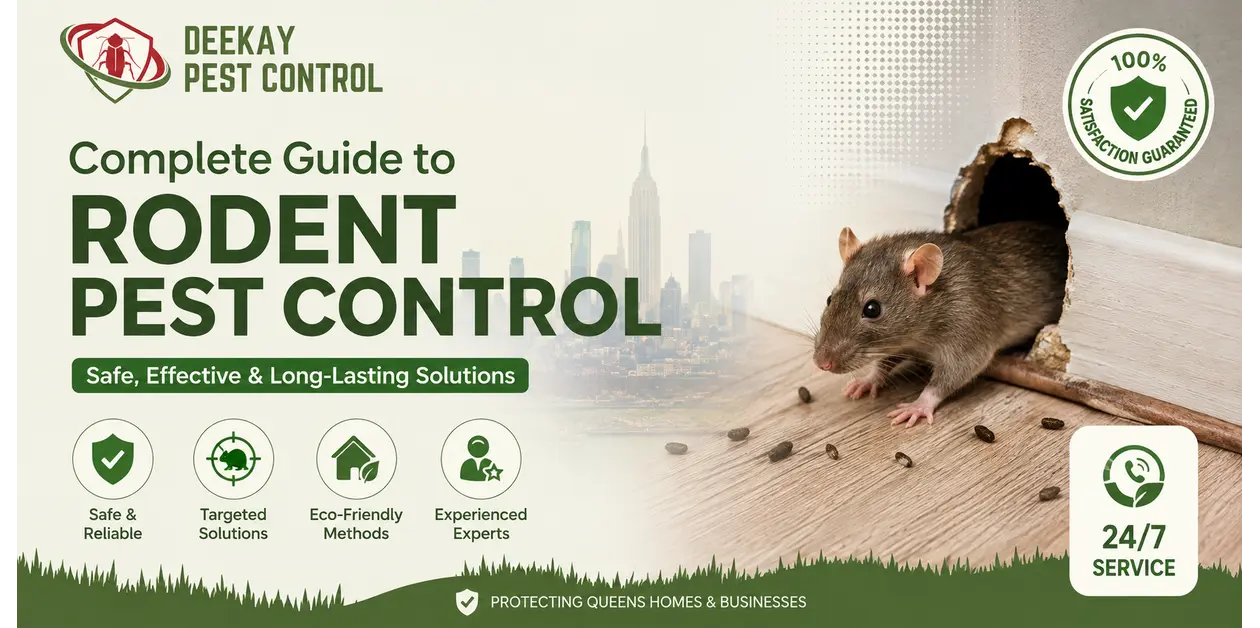
Rodent problems can begin quietly, but they can quickly become a serious concern for homeowners and businesses. If you are looking for rodent control Queens NY , dealing with rat control Queens NY, or searching for mouse control Queens NY, the first step is identifying the signs and understanding how rodents are getting inside. Effective rodent pest control involves more than removing a single mouse or rat. It requires inspection, removal, prevention, and attention to the conditions that attract rodents.
In Queens, rodents can find food, shelter, and access through small openings around homes, apartments, businesses, basements, garages, and other structures. Once rodents establish a nesting area, they can cause property damage, contaminate food, and create ongoing sanitation concerns. This guide explains how to recognize rodent activity, understand the risks, and take practical steps toward long term rodent prevention.
Why Rodent Control Matters in Queens
Rats and mice are adaptable pests that can live close to people when they have access to food, water, and shelter. They may enter buildings through gaps around pipes, doors, foundations, vents, utility lines, and other openings.
A small rodent problem can become more difficult when it is ignored. Rodents can reproduce quickly and may remain hidden inside walls, ceilings, cabinets, basements, attics, crawl spaces, or storage areas.
For homeowners, rodent activity can affect comfort and sanitation. For businesses, especially restaurants, food facilities, retail stores, and warehouses, an infestation can create additional operational and reputation concerns.
That is why early rodent inspection and proper exclusion are important parts of effective rodent control.
Common Rodents Found in Homes and Businesses
Understanding the type of rodent involved can help determine the most appropriate control approach.
House Mice
House mice are small rodents that can squeeze through surprisingly small openings. They often nest near food sources and may be found inside kitchens, cabinets, storage areas, wall voids, and other protected spaces.
Common signs include small droppings, gnaw marks, nesting materials, scratching sounds, and food packaging damage.
Norway Rats
Norway rats are larger rodents that commonly stay close to ground level. They may be found around basements, foundations, garbage areas, outdoor structures, and other locations where food and shelter are available.
Their larger size means they can cause considerable damage when they gain access to a building.
Roof Rats
Roof rats are strong climbers and can use trees, utility lines, roof areas, and upper sections of buildings to move around. They may enter attics, upper floors, and other elevated spaces.
Identifying whether the activity involves mice or rats can help determine the most suitable control strategy.
Signs of a Rodent Infestation
Knowing the signs of rodent infestation can help you act before the problem becomes larger.
Rodent Droppings
Droppings are one of the most common signs of rodent activity. Look around cabinets, food storage areas, along walls, behind appliances, inside garages, and near other areas where rodents may travel.
Scratching Sounds
Scratching, squeaking, or movement inside walls and ceilings may indicate rodents are nesting or traveling through hidden spaces.
Gnaw Marks
Rodents constantly gnaw, which can result in damage to food packaging, wood, plastic, insulation, and electrical wiring.
Nesting Materials
Shredded paper, cardboard, fabric, insulation, and other soft materials may be collected into hidden nesting areas.
Unusual Odors
A persistent musty or unpleasant odor may develop where rodent activity has been present for an extended period.
Live Rodent Sightings
Seeing a rat or mouse is a clear reason to inspect the property. Repeated sightings may indicate that rodents have established a nesting area nearby.
How Rodents Enter a Property
Rodents do not need a large opening to gain access. Small gaps around the structure can provide an entry route.
Common entry points include:
- Cracks around foundations
- Openings around pipes and utility lines
- Gaps beneath doors
- Damaged vents and screens
- Openings around roofs and siding
- Garage door gaps
- Basement openings
- Gaps around windows
- Holes created by damaged construction materials
New York health guidance also identifies openings around foundations, walls, pipes, wires, vents, doors, and drains as potential routes for rats and mice.
Finding and correcting these openings is an important part of rodent removal Queens NY because removing existing rodents without addressing entry points can allow new activity to develop.
Why Rodents Cause Property Damage
Rodents are persistent chewers. Their gnawing can damage electrical wiring, insulation, wood, plastic, stored materials, and food packaging.
Electrical wiring is particularly important because damaged wiring can create a potential safety concern. Rodents can also damage insulation and create nesting areas inside walls, ceilings, attics, and other hidden locations.
Businesses may experience additional problems when rodents contaminate stored products or enter areas where food and customer goods are handled.
For these reasons, rodent control should focus on both current activity and the conditions that allow rodents to remain on the property.
Health and Sanitation Concerns
Rodents can contaminate surfaces and food through droppings, urine, and other forms of contact. They may also carry organisms that can contribute to disease transmission.
The risk is particularly important in kitchens, restaurants, food storage areas, warehouses, and other locations where sanitation is essential.
If you discover rodent droppings or nesting materials, avoid disturbing contaminated areas unnecessarily. Proper cleaning and sanitation should be handled carefully, particularly when there is significant contamination.
How to Get Rid of Rodents
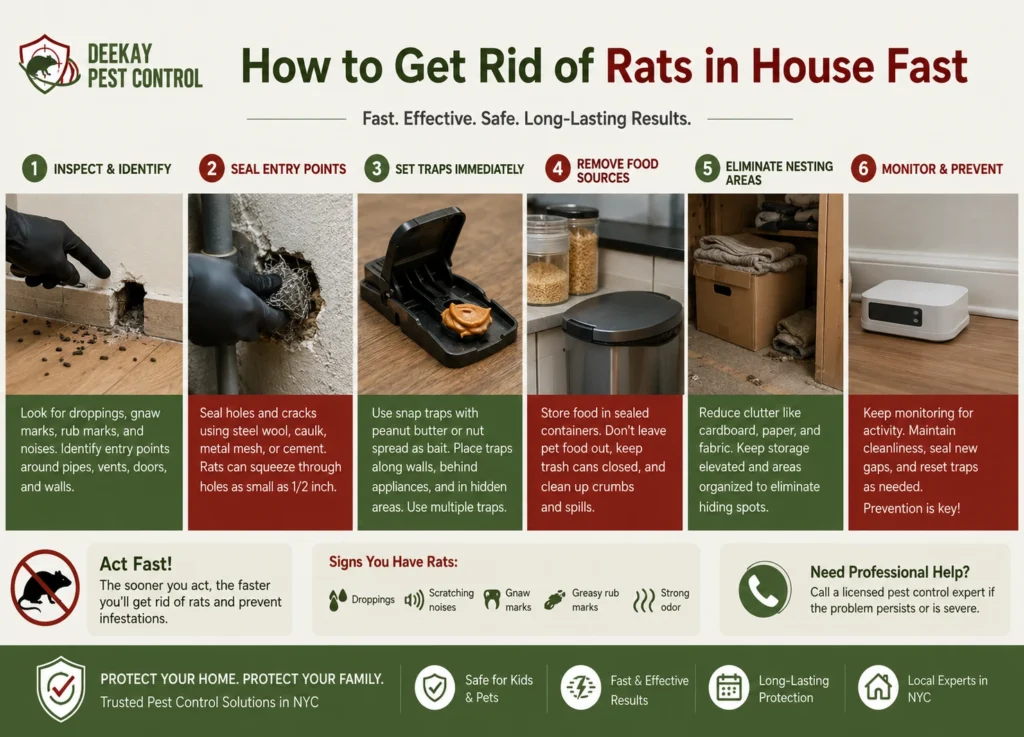
Effective rodent control usually requires several steps rather than relying on one method.
Inspection
The first step is identifying where rodents are active. An inspection can look for droppings, nesting areas, travel paths, damage, food sources, and potential entry points.
Trapping and Targeted Control
Traps can help reduce rodent activity when they are used correctly and positioned around known travel areas.
Depending on the property and infestation, targeted control methods may also be considered. Any rodenticide use should follow product label requirements and appropriate safety precautions.
Exclusion
Exclusion focuses on preventing rodents from entering again. Gaps and openings should be identified and properly sealed using suitable materials.
This is one of the most important parts of long term rodent prevention because removing rodents without correcting access points may only provide temporary results.
Sanitation
Food, garbage, pet food, birdseed, and other attractants should be managed carefully. Keeping food in sealed containers and maintaining clean storage areas can reduce opportunities for rodents to feed.
Residential Rodent Control in Queens
Homes and apartments can provide rodents with food, warmth, water, and shelter. Kitchens, basements, garages, attics, storage rooms, and wall voids can all become potential areas of activity.
Homeowners should regularly inspect areas where pipes, wires, doors, vents, and foundations meet the structure.
If you notice repeated droppings, scratching sounds, damaged food packaging, or live rodents, early action can help prevent the problem from becoming more difficult to manage.
Commercial Rodent Control in Queens
Businesses can face different challenges from residential properties. Restaurants, retail stores, warehouses, offices, food facilities, and other commercial buildings may have multiple entry points and food or waste sources.
Commercial rodent control should consider the entire property rather than focusing only on the area where a rat or mouse was seen.
Regular inspections, sanitation practices, exclusion work, monitoring, and appropriate treatment can help reduce the chance of recurring rodent activity.
How to Prevent Rats and Mice From Returning
Rodent prevention starts with making the property less attractive and harder to enter.
- Store food in sealed containers.
- Keep garbage containers closed.
- Clean food spills promptly.
- Do not leave pet food exposed for long periods.
- Reduce clutter in storage areas.
- Repair damaged screens and vents.
- Seal openings around pipes and utility lines.
- Keep doors closed when possible.
- Remove unnecessary debris around the property.
- Inspect basements, attics, garages, and exterior walls regularly.
Outdoor maintenance also matters. Excess vegetation, food waste, fallen fruit, clutter, and accessible garbage can provide rodents with shelter and food close to the building.
When Should You Call a Rat or Mouse Exterminator?
Some minor rodent activity may appear manageable at first, but professional assistance becomes more appropriate when the signs continue or increase.
Consider professional help if you:
- See rodents repeatedly
- Find fresh droppings in several areas
- Hear activity inside walls or ceilings
- Discover damaged electrical wiring
- Find evidence of nesting
- Continue seeing rodents after using basic control measures
- Manage a restaurant or commercial property
- Cannot identify where rodents are entering
A rat exterminator Queens NY service or mouse exterminator Queens NY service can assess the property, identify activity, locate entry points, and develop a treatment approach based on the conditions found.
Why Local Rodent Control Matters
Rodent problems can vary from one property to another. A basement apartment may have different access points than a single family home, restaurant, warehouse, or retail property.
Local knowledge can help technicians understand common building conditions and environmental factors that may contribute to rodent activity.
For property owners searching for rodent control Queens NY, the goal should not simply be removing the visible rodent. A complete approach should address current activity, potential entry points, food sources, nesting areas, and prevention.
Deekay Pest Control for Rodent Problems in Queens
Dealing with rats or mice can be stressful, especially when the source of the problem is hidden. Deekay Pest Control provides rodent pest control solutions designed to address both active rodent problems and the conditions that contribute to repeat activity.
Our approach focuses on identifying signs of infestation, locating potential entry points, determining the extent of activity, and recommending appropriate control and prevention measures.
Whether the issue involves a home, apartment, store, office, restaurant, or other property, addressing the problem early can help reduce property damage and prevent the infestation from becoming more difficult to control.
Frequently Asked Questions About Rodent Control
How do I know if I have a rodent infestation?
Fresh droppings, scratching sounds, gnaw marks, nesting materials, odors, and repeated sightings are common signs.
What is the best way to get rid of rats and mice?
Effective control usually combines inspection, targeted removal, exclusion, sanitation, and ongoing monitoring.
Can rodents enter through very small openings?
Yes, rats and mice can use surprisingly small gaps around foundations, doors, vents, pipes, and utility openings.
How long does rodent control take?
The timeline depends on the size of the infestation, access points, nesting locations, and how quickly prevention measures are completed.
Can rodents return after treatment?
Yes, especially when food sources and entry points remain available, which is why exclusion and prevention are important.
When should I contact a rodent control company?
Contact a professional when rodent activity continues, multiple signs are present, or rodents are entering difficult to reach areas.
Final Thoughts
Rodent problems should not be ignored. Rats and mice can damage property, contaminate food, create sanitation concerns, and establish hidden nesting areas if they are allowed to remain.
The most effective approach combines early identification, proper removal, entry point control, sanitation, and prevention. If you are dealing with rats or mice in Queens, understanding the signs and taking action early can make the problem easier to manage.
For homeowners and businesses looking for rodent control Queens NY, Deekay Pest Control can help address active rodent problems while focusing on practical steps that reduce the chance of future activity.