
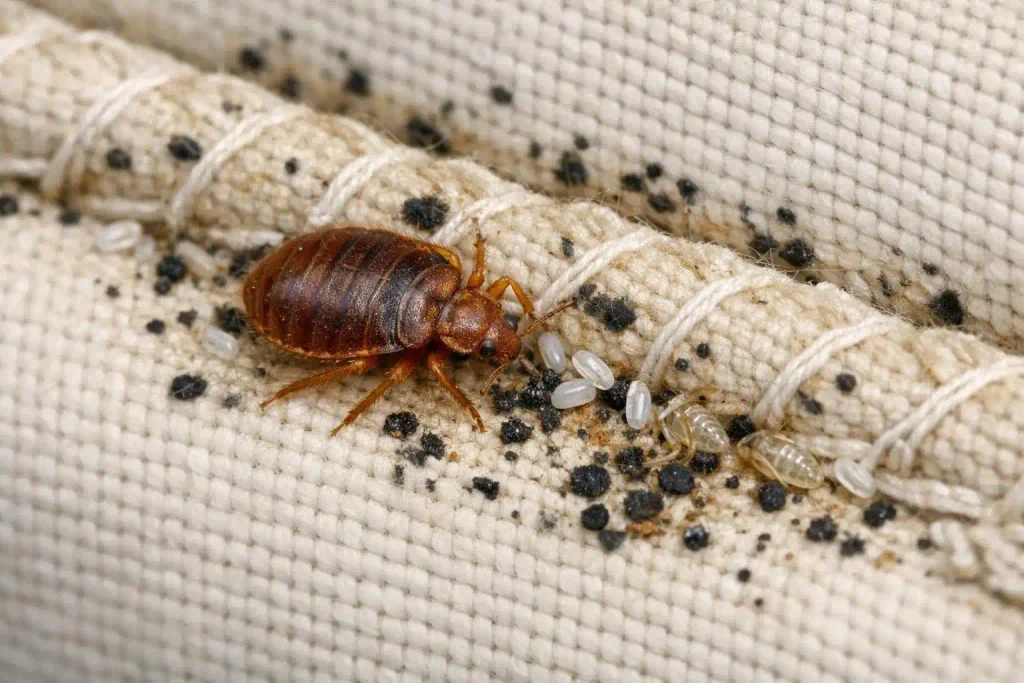
What does bed bug poop look like? Tiny black, dark brown, or rusty-colored ink spots, usually about the size of a pinhead or a small pen dot. They often appear in groups along mattress seams, bedsheets, bed frames, and nearby furniture. On fabric, the spots may spread like ink, while on hard surfaces, they can dry into small, dark marks.
Finding these spots around your bed can be worrying, especially when you cannot see any insects. However, not every black stain is a sign of bed bugs. Homeowners and renters who notice unexplained marks can learn more about common household pests through Pet Control in Queens NY. This guide explains how to identify bed bug waste, where to find it, how to compare it with other stains, and what steps to take if you suspect an infestation. It covers bed bug poop on sheets and bedding, bed bug stains on mattress seams and box springs, and how to tell bed bug marks apart from other household stains.
How to Identify Bed Bug Poop by Its Appearance
Bed bugs feed on blood and leave behind small amounts of waste after feeding. This waste is called bed bug feces, and it often looks like tiny ink marks rather than solid pellets. The appearance can change depending on the surface where the waste lands. On white fabric, the spots may spread into dark stains, while on wood or painted surfaces, they may dry as small dots. Looking at the color, size, texture, and pattern can help you recognize possible bed bug activity.
Many people mistake bedbug poop for ordinary dirt because the marks are so small. However, dirt often brushes away, while bed bug waste may leave a stain that stays on the surface. Some spots appear alone, but several marks may collect in one area where the insects hide. These clues are useful, although a stain alone cannot confirm that bed bugs are present.
What Color Is Bed Bug Poop?
Bed bug waste is usually black, dark brown, or rusty brown because it contains digested blood. Fresh waste may appear dark reddish-brown, while dried marks can look almost black. The color is often easier to notice on white mattresses, pillowcases, and light-colored furniture. On dark bedding, the marks may blend into the material and become harder to see. Since other stains can have similar colors, it is important to check for more evidence before identifying the source.
How Big Are Bed Bug Droppings?
Bed bug droppings are very small and often look like marks made by the tip of a ballpoint pen. Many visible spots are roughly 1 to 2 millimeters across, although the size varies depending on how much liquid spreads into the material. A single spot may be difficult to notice, but several marks close together can form a visible cluster. Using a flashlight can make these small marks easier to find along mattress seams, bed frame joints, and other narrow spaces.
What Is the Texture of Bed Bug Poop?
Fresh bed bug waste is soft and liquid-like, which allows it to soak into fabric. Once absorbed, it may leave a flat stain with slightly uneven edges. On smooth surfaces such as plastic, wood, or painted walls, the waste can dry into a dark dot that may feel slightly raised. Unlike loose crumbs or dust, these marks may not brush away easily. This difference can help during an inspection, but it should not be used as the only way to identify bed bugs.
What Does Bed Bug Poop Look Like on Different Surfaces?
Bed bug waste can look different depending on where it lands. Fabric often absorbs the liquid and creates a stain, while hard surfaces may hold the waste on top. This is why dark marks on a mattress may look different from those found on a wooden headboard. When comparing suspected marks with bed bug feces images, pay attention to both the appearance of the stain and the type of surface shown.
Bed Bug Poop on Mattresses and Sheets
Mattresses and bedsheets are common places to notice dark stains because bed bugs often hide near sleeping areas. On mattresses, small black dots may appear along seams, piping, tags, and folded edges. These marks can look like tiny ink drops, especially on light-colored fabric. Several spots may appear close together near a hiding place, while others may be spread along a seam.
On white bedsheets, the marks may appear as dark brown or black spots with soft edges. Some can look similar to dried ink or small blood stains. If you notice unusual marks, check the mattress underneath and inspect the nearby bed frame. Comparing the marks with clear bed bug poop pictures can help you understand their general appearance, but photographs cannot confirm the cause without other evidence.
Bed Bug Poop on Pillows and Blankets
Pillows, pillowcases, and blankets may also show dark marks when bed bugs are present. These stains often appear near seams, folds, or areas that touch other bedding. On white pillowcases, small black dots may be easy to notice, while patterned blankets can hide them. The marks may remain even after normal cleaning if they have soaked into the fabric.
However, dark spots on a pillow do not always come from insects. Makeup, ink, food, and other household materials can leave similar stains. Before assuming that bed bugs are responsible, inspect the mattress, headboard, and nearby furniture for signs such as shed skins or live insects.
Bed Bug Poop on Walls and Furniture
Bed bug waste can also appear on wooden headboards, furniture joints, painted walls, and other surfaces near the bed. On wood, the marks may resemble tiny black paint dots. They often collect around cracks, screw holes, and narrow gaps where insects can hide. On walls, dark specks may appear behind a headboard, along baseboards, or close to furniture.
These marks may dry on the surface instead of spreading into it. A few dark spots on a wall are not enough to prove that bed bugs are present. Check whether the marks are close to possible hiding places and whether other evidence is visible nearby.
Bed Bug Poop vs. Other Stains and Pest Droppings
Small black marks can come from several sources, including bed bugs, fleas, cockroaches, and ordinary household dirt. Some look similar in color but differ in shape, texture, and location. When comparing suspected waste with bed bug excrement pictures, it is important to look beyond the black spots and consider the surrounding area. Finding live insects, eggs, or shed skins can provide stronger evidence than stain appearance alone.
| Type of Mark | Appearance | Common Clues |
| Bed bug waste | Small black or dark brown ink-like spots | Often found near mattresses, bed frames, and hiding places |
| Blood stains | Red, rusty, or reddish-brown marks | May come from crushed insects or another source of bleeding |
| Flea dirt | Tiny dark grains that resemble black pepper | Often loose and found around pets or pet bedding |
| Cockroach droppings | Fine dark specks or small solid pellets | Often found near kitchens, cabinets, and hiding areas |
| Ordinary dirt | Dust, grains, or uneven dark marks | Often brushes away without leaving a fixed stain |
Bed Bug Poop vs. Blood Stains
Bed bug waste and blood stains may appear on the same bedding, but they are not identical. Waste usually looks like a small dark ink spot, while blood stains may be red, rusty, or reddish-brown. Blood marks can appear when a fed bed bug is crushed against bedding, but scratches and other sources of bleeding can leave similar stains. If you notice both types of marks near mattress seams, inspect the surrounding area for live insects or shed skins before drawing a conclusion.
Bed Bug Poop vs. Flea Dirt
Flea dirt often looks like tiny black grains of pepper. It is commonly found in pet fur, pet bedding, and other places where animals rest. Unlike waste that has soaked into fabric, flea dirt is usually loose and may move when brushed from the surface. When it becomes wet, it can release a reddish color because it contains digested blood. This means that a wet stain test alone cannot reliably tell you whether the waste came from fleas or bed bugs.
Bed Bug Poop vs. Cockroach Droppings
Cockroach droppings may also appear as small dark specks, especially when they come from smaller cockroach species. Larger cockroaches can leave more solid, pellet-shaped waste. Cockroach activity is often found near kitchens, sinks, appliances, and storage areas, while bed bug activity is more closely linked to sleeping and resting places. However, both pests can appear in different parts of a home, so the location should be treated as a clue rather than final proof.
How to Tell if Black Spots Are Bed Bug Poop
If you discover small black spots on your mattress or furniture, start by checking their appearance and location. Spots grouped around mattress seams, headboard joints, or furniture cracks may be more suspicious than a single mark in an unrelated area. Use a flashlight to inspect nearby hiding places and look for live insects, pale eggs, or shed skins. These signs can help you understand whether the marks are linked to bed bug activity.
Some bed bug feces pics show dark spots with reddish-brown edges or small smears on fabric. Similar marks can sometimes release color when touched with a damp cotton swab. However, flea dirt and other stains may react in the same way, so a smear test is not reliable proof. Take clear photographs of the marks before cleaning them, and try to capture any insects you find for proper identification.
Where Do Bed Bugs Leave Their Droppings?
Bed bugs usually leave waste near the areas where they hide and feed. Since these insects often stay close to people while they sleep, the mattress and bed frame are good places to begin an inspection. Common hiding places include mattress seams, box spring edges, headboard joints, furniture cracks, and narrow spaces behind nearby objects. Marks may also appear around upholstered furniture, curtain folds, baseboards, and wall cracks.
When reviewing bed bug droppings photos, notice that many confirmed examples show waste close to hiding places rather than spread evenly across a room. This can help guide your inspection. Begin with the mattress and bed frame, then check nearby furniture and other narrow gaps. Do not remove electrical outlet covers or place tools inside electrical fittings unless you are qualified to work safely around electricity.
Do Bed Bug Droppings Mean You Have an Infestation?
Finding suspected bed bug waste is a warning sign, but it does not always mean there is an active infestation. Old marks can remain after a previous problem has ended, and some household stains can look similar. If new spots continue appearing around the same hiding place, inspect the area for live insects, eggs, or shed skins. Finding several signs together provides a clearer picture of possible activity.
The number of spots does not tell you exactly how many bed bugs are present. A small number of marks may be linked to limited activity, while larger groups can build up over time. Even when images of bed bug feces show heavy staining, the amount of waste alone cannot confirm the current size of an infestation. A careful inspection is needed to determine whether bed bugs are still present.
For apartment residents, reporting suspected activity to a landlord or property manager is an important step. Bed bugs can travel through belongings and furniture, and problems in shared buildings may involve more than one unit.
Other Signs of Bed Bugs to Look For
Dark stains are only one sign of possible bed bug activity. Adult bed bugs are small, flat, oval-shaped insects that are reddish-brown and often compared to the size of an apple seed. Younger bed bugs are smaller and lighter in color, making them harder to notice. These insects often hide inside mattress seams, bed frames, and furniture cracks during the day.
You may also find pale shed skins, tiny eggs, or rusty stains on bedding. Shed skins are the empty outer coverings that bed bugs leave behind as they grow. Eggs are small and light-colored, which makes them difficult to see without good lighting. Some people notice itchy bites after sleeping, but bites alone cannot confirm bed bugs because other insects and skin conditions can cause similar reactions.
A careful inspection should focus on several signs together. Finding an actual insect and having it correctly identified is more reliable than judging a stain or bite on its own.
How to Clean Bed Bug Poop From Mattresses and Bedding
Cleaning bed bug stains can improve the appearance of bedding, but removing the visible marks does not eliminate hidden insects or eggs. Before cleaning, take photographs of any suspicious areas so you have a record of what you found. Some bed bug excrement photos show stains that have soaked deeply into fabric, which explains why certain marks remain visible after washing.
For washable sheets, pillowcases, and blankets, follow the care label and use a suitable detergent. A fabric-safe stain remover may help reduce dark marks. If bed bugs are suspected, place the bedding in sealed bags before moving it to the laundry area. The EPA recommends using a clothes dryer on high heat for 30 minutes for items that can safely tolerate that setting. Washing alone may not kill all bed bugs or their eggs.
For mattresses and bed frames, carefully vacuum accessible seams, corners, and narrow gaps. After vacuuming, seal the contents in a plastic bag and dispose of them outside. Avoid soaking mattresses with water or applying household chemicals that are not labeled for the intended use. Some stains may remain because the waste has already entered the fabric, and cleaning the surface does not prove that an infestation is gone.
What to Do if You Find Bed Bug Droppings
If you notice suspicious stains, begin by inspecting the mattress, box spring, headboard, and nearby furniture. Look for live insects, shed skins, or eggs, and take clear photographs of any evidence. Record where you found the marks so you can check the same areas again. Avoid moving potentially infested bedding or furniture into other rooms, since bed bugs can hide in fabric and narrow gaps and may spread with personal belongings.
If you rent your home, inform the landlord or property manager and explain where the marks appeared. Residents looking for a Bed Bug Removal Apartments Jamaica NY Guide should begin by documenting the evidence, reporting suspected activity, and understanding how inspections may work in shared buildings. The Deekay Pest Control Jamaica service-area page also discusses pest problems in local apartment buildings.
Do not throw away a mattress simply because you found dark stains. Many items can be inspected and treated without being discarded. Avoid using random insect sprays, especially on bedding or mattresses, because incorrect pesticide use can create safety risks and may not reach hidden insects.
When to Call a Professional Bed Bug Exterminator
A professional inspection may be useful when dark marks keep appearing, live insects are found, or signs of activity are present in several areas. It can also help when the marks are difficult to identify. Since different pests can leave similar stains, correctly identifying the cause is important before choosing any treatment.
Professional services may involve inspecting hiding places, identifying affected areas, and selecting suitable treatment methods. Homeowners and renters can learn more through Bed Bug Treatment Queens NY which explains professional treatment options and the inspection process. The most suitable approach depends on the property, the areas involved, and the level of pest activity.
Cost is another concern when bed bugs are confirmed. Readers researching Bed Bug Treatment Cost NYC should know that pricing can vary based on property size, treatment method, infestation level, and the number of visits required. A professional inspection can help explain what work may be needed before a treatment plan is chosen.
Frequently Asked Questions
What Do Bed Bug Droppings Look Like?
They usually look like tiny black, dark brown, or rusty-colored ink spots. On fabric, the marks may spread slightly and leave uneven edges, while on hard surfaces, they can dry into small dark dots. Their appearance and location can suggest bed bug activity, but stains alone cannot confirm an infestation.
Does Bed Bug Poop Smear When Wet?
Some bed bug waste may smear or release a reddish-brown color when touched with a damp cloth or cotton swab. This happens because the waste contains digested blood. However, flea dirt and other stains can behave in a similar way, so the result should not be treated as final proof.
Does Bed Bug Poop Have a Smell?
Individual droppings are usually too small to create a noticeable odor. Larger infestations may produce a musty or slightly sweet smell associated with bed bug activity. However, smell alone is not a reliable way to identify the insects or their waste.
Can You Find Bed Bug Poop Without Seeing Bed Bugs?
Yes. Bed bugs often hide in mattress seams, furniture joints, and narrow cracks during the day. Their dark marks may remain visible even when the insects are hidden. If you find suspicious spots, check nearby hiding places for eggs, shed skins, or live bugs.
Is Bed Bug Poop Dangerous to Humans?
Bed bugs are not known to spread diseases to people. However, an infestation can cause itchy bites, sleep problems, and allergic reactions in some people. Their waste may also be a sign of unwanted insect activity in the home. Avoid direct contact with unknown pest waste and clean affected surfaces carefully.
Does Bed Bug Poop Wash Out of Sheets?
Some stains may fade or disappear during washing, especially when they have not soaked deeply into the fabric. Older marks can be harder to remove. Use a suitable detergent and follow the fabric care instructions. Removing the stains does not mean that all bed bugs or eggs have been eliminated.
Can Bed Bug Droppings Be Old?
Yes. Dark marks can remain on mattresses, walls, and furniture after earlier bed bug activity has ended. The appearance of a stain alone cannot tell you how old it is. Look for new marks, live insects, eggs, or shed skins to better understand whether activity may still be present.
What Is the Difference Between Bedbug Faeces and Bed Bug Waste?
There is no difference. Bedbug faeces is another name for the waste left by bed bugs after they digest blood. The word faeces is the British English spelling of feces. Both terms describe the same dark marks that may appear on bedding, furniture, and other surfaces.
Do Bed Bug Stains Look Different in British and American Photos?
No. The appearance is the same regardless of which spelling is used. Searches for bed bug faeces pictures may show the same types of dark spots seen in American identification guides. When comparing photographs, focus on the stains, surfaces, and nearby pest evidence rather than the wording used to describe them.
Final Thoughts
Bed bug poop usually looks like tiny black, dark brown, or rusty-colored ink marks. These stains often appear near mattress seams, bedsheets, bed frames, headboards, and other places where bed bugs hide. Their color, size, texture, and location can provide useful clues, but they are not enough to confirm an active infestation.
If you notice suspicious marks, inspect the surrounding area for live insects, eggs, and shed skins. Take photographs before cleaning, avoid moving potentially infested items, and seek professional identification when the evidence remains unclear. Understanding what these marks look like can help you recognize a possible problem and choose the right next step.